








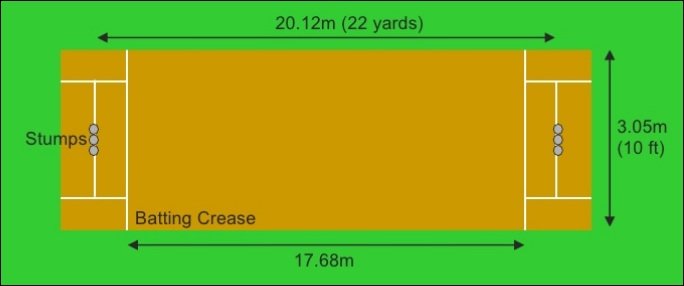
Cricket is a pastime full of policies, strategies, and nuances that make it fascinating and sometimes complicated for fans. One of the most often asked questions for beginners is: how many creases are there in cricket? In this text, we are able to solve this query and discover all the creases in detail, their capabilities, and why they will be so important in cricket.
Understanding Cricket Creases: What They Are and Why They Matter
Before we dive into the kind of creases, it’s crucial to understand what a crease in cricket is. A crease is a line marked on the cricket pitch that defines the areas for batsmen, bowlers, and fielders. Creases are crucial for figuring out guidelines collectively with no-balls, stumpings, run-outs, and batting protection.
Creases are drawn with white paint or chalk, and they’ll be steady measurements in step with the felony tips of cricket. The International Cricket Council (ICC) and Marylebone Cricket Club (MCC) define the correct dimensions of every crease.
How Many Creases Are There in Cricket? The Official Count
So, what number of creases are there in cricket? Officially, there are 4 most important creases at every point of the pitch:
- Bowling Crease
- Popping Crease
- Return Crease ( traces, however, counted as one pair)
Let’s break those down in detail.
1. Bowling Crease – Where the Bowler Starts
The bowling crease is the line that is drawn at every stop of the pitch, properly consistent with the stumps. There are 3 stumps, and the bowling crease passes through their facilities.
- Purpose: The bowler’s front foot wants to land inside the area of this crease whilst turning in the ball. If it crosses the road, it’s referred to as a no-ball.
- Dimensions: The bowling crease is eight ft 8 inches (2.Sixty four meters) long.
This crease is crucial for bowlers to apprehend their function and hold legality while turning the ball. Without it, it might not be possible to select front-foot no-balls accurately.
2. Popping Crease – Safe Zone for Batsmen
The popping crease is perhaps the most well-known crease in cricket. It is drawn four ft inside the front of the bowling crease at both ends of the pitch.
- Purpose: This line determines whether or not a batsman is constant from being run out or stumped. The batsman wants to have a few parts of their body or bat grounded in the back of this line to keep away from dismissal.
- Length: The popping crease is 12 toes massive, which is slightly longer than the bowling crease.
The popping crease is likewise used to pick out no-balls for bowlers. If a bowler oversteps the bowling crease, the shipping is taken into consideration illegal.
3. Return Crease – Guideline for Bowlers
The move again creates runs perpendicular to the bowling crease on every aspect of the stumps. There are move lower returned creases at each end; however, they may be commonly taken into consideration as one pair.
- Purpose: Bowlers must deliver the ball with their lower returning foot staying in the one’s lines. Stepping out of doors, the pass back crease can also bring about a no-ball.
- Dimensions: Each pass decreases back crease extends four toes in the returned of the bowling crease and four ft in the front of it.
Return creases act as pointers for bowlers to make certain that their transport comes from an honest attitude, preventing unfair gain to high-quality bowlers like spinners or fast bowlers.
Summary Table of Cricket Creases
Crease NamePositionPurposeLength/WidthBowling CreaseAt stumpsBowler’s foot placement, no-ball rule8 toes 8 inPopping Crease4 ft within the front of bowling creaseBatsman protection, run-outs, stumpings12 ftReturn CreasePerpendicular to bowling creaseBowler’s over again foot placement4 feet behind & 4 feet earlier of bowling crease
Why Knowing the Number of Creases Is Important
Many beginner cricketers ask “what number of creases are there in cricket?” because the information is excessive to play the sport effectively. Here’s why:
- For Batsmen: Knowing the popping crease permits you avoid getting run out or stumped.
- For Bowlers: The bowling and go back creases make sure that your deliveries are felony. Stepping outside these lines can feel like your team’s important runs.
- For Umpires: Umpires rely upon creases to determine no-balls, stumpings, and run-outs efficiently.
- For Fielders: Fielders need to apprehend creases to make precise decisions on run-outs.
In brief, creases shape the spine of cricket guidelines. Without them, the game may lose form and fairness.
Common Questions About Cricket Creases
What Happens if a Bowler Steps Over the Crease?
If a bowler’s front foot lands beyond the bowling crease, it is known as a no-ball. The batting facet earns a in addition run, and the shipping does not count closer to the over.
How Far Is the Popping Crease From the Bowling Crease?
The popping crease is four feet in front of the bowling crease. This small distance is sufficient to provide batsmen with a few protections from being stumped, although difficult for them to make runs.
Can a Batsman Be Safe Outside the Popping Crease?
No. A batsman must have some part of their body or bat grounded within the lower back of the popping crease to keep away from being run out or stumped. Even being slightly outdoors can bring about dismissal.
Tips for Beginners to Remember Cricket Creases
- Bowling Crease = Bowler’s Start Line
- Popping Crease = Batsman’s Safety Line
- Return Crease = Bowler’s Foot Guide
An easy way to keep in mind: Bowling is again, popping is front, pass lower back is a factor. This makes it easy not to don’t forget which crease serves what purpose.
Cricket Creases in Different Formats of the Game
Whether it’s Test cricket, One Day Internationals (ODIs), or T20S, the creases stay equal. The jail suggestions of cricket define the measurements universally, so there’s no distinction within the placement of bowling, popping, or cross decrease lower back creases in the course of formats.
This standardisation enables gamers to maintain consistency, whether or not or now not they’re playing a nearby membership suit or an international activity.
Final Answer: How Many Creases Are There in Cricket?
So, to answer the question, in fact:
- Each stop of the pitch has 3 forms of creases: bowling crease, popping crease, and move creases (a pair).
- Considering every end of the pitch, there are 6 main creases in a typical if counting all man or woman traces one after the other.
- If counting crease sorts in place of person strains, there are three number one crease sorts applied in the game.
Knowing this permits every cricket participant to recognise their role, observe the regulations, and play better.
Conclusion
Understanding the number of creases in cricket is crucial for gamers, umpires, and fanatics. Creases determine the legality of bowling, the safety of batsmen, and the equity of run-outs. By gaining knowledge of the bowling crease, popping crease, and cross creases, you can enhance your activity and revel in cricket lots extra.